Circle Outlines Infrastructure Needs Beyond Payments for Agentic Economy
Circle Outlines Infrastructure Needs Beyond Payments for Agentic Economy
🤖 What agents need beyond money

Circle has published a framework describing the infrastructure layer needed to support AI agents as economic participants.
Key Components Identified:
- Value storage mechanisms for agents
- Authority and permission systems
- Receipt generation capabilities
- Policy compliance frameworks
- Transaction settlement infrastructure
The company positions payments as just the "visible layer" of agentic commerce, while the underlying operating system requires additional primitives.
This builds on Circle's earlier Nanopayments testnet launch, which enables gas-free USDC transfers as small as $0.000001 for machine-to-machine transactions and pay-per-call APIs.
Read the full framework: Beyond Agentic Payments

A single API or inference call can cost a fraction of a cent. @gordonliao explains why agentic payments need rails built for nanopayments, from data and inference calls to more complex commerce workflows. Circle Agent Stack helps developers build for that shift.
The first wave of agentic payments is already here: agents buying data, paying for API calls, and settling tiny transactions in real time. But payments are only the visible layer. As agents become economic participants, they need ways to hold value, request authority, create
Circle Partners with Toss and Kakao to Explore Stablecoin Payments in Korea
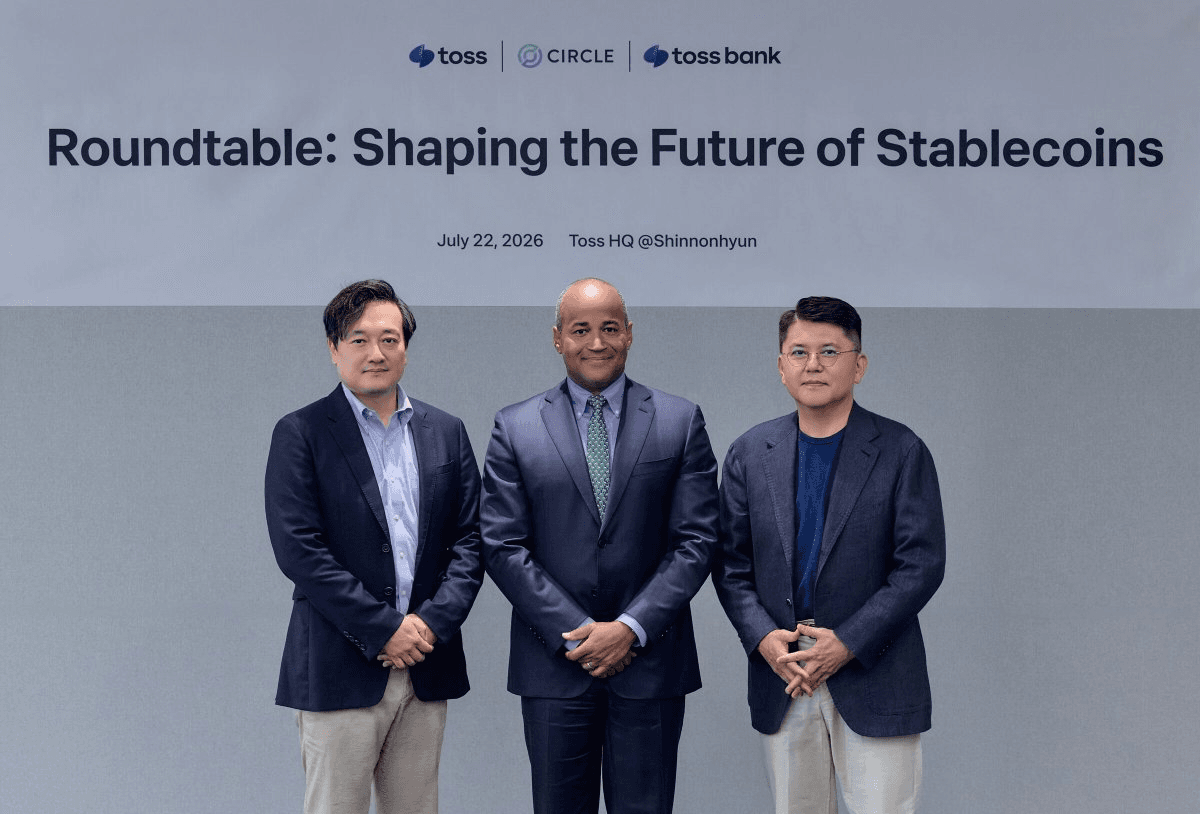
Circle has announced two significant partnerships in South Korea to explore blockchain-based payment infrastructure. **Key Developments:** - Circle is collaborating with **Toss and Toss Bank** to assess stablecoin-based payment opportunities across one of Korea's most widely used fintech platforms - A separate MOU with **Kakao Group** will explore opportunities for USDC and Circle's payment rails across payments, settlement, and digital asset connectivity These partnerships position Circle to potentially integrate stablecoin technology into major Korean fintech ecosystems, expanding blockchain payment infrastructure in one of Asia's most tech-forward markets.
Korean Firms Build Digital Asset Infrastructure Before Rules Finalize
Korean companies are moving forward with digital asset initiatives despite incomplete regulatory frameworks. Banks, super apps, exchanges, and corporations are launching pilots and establishing partnerships across key functions: - **Settlement infrastructure** - **Token issuance platforms** - **Custody solutions** - **Distribution channels** - **Cross-border treasury operations** The strategic shift is notable: institutions are no longer asking *should we wait?* but rather *which role do we want to play?* This proactive approach positions Korea as a case study for markets worldwide that are still drafting digital asset regulations. The Bank of Korea continues advocating for bank-led won stablecoin issuance while advancing deposit token pilots, though issuer rules remain unresolved in the country's digital asset legislation. [Read the full analysis](https://www.circle.com/current/koreas-head-start-signals-for-every-market-drafting-digital-asset-rules)
Circle Receives Federal Trust Bank Charter for USDC Infrastructure
Circle has secured final approval from the Office of the Comptroller of the Currency (OCC) to establish **Circle National Trust**, a federally chartered national trust bank. This marks Circle as the first digital assets firm in U.S. history to obtain a de novo federal trust bank license. **Key implications:** - Strengthens USDC stablecoin infrastructure through federally regulated custody - Establishes new standards for transparency and governance in digital asset operations - Reserve management capabilities planned as a future function - Enables financial institutions to build on public blockchains with regulatory clarity Circle President Heath Tarbert emphasized this milestone provides the regulatory framework needed for institutional adoption. The federal oversight positions USDC as a more trusted option for payments across 180+ countries, treating redemption as a fundamental right rather than a privilege.
GENIUS Act Sets New Standards for Stablecoin Issuers with Reserve Reporting and Compliance Requirements
The GENIUS Act introduces comprehensive regulatory standards for stablecoin issuers, focusing on three core pillars: - **Reserve reporting requirements** for transparent backing - **Financial crime compliance** measures - **Clear regulatory framework** for the industry These standards aim to establish trust and accountability across the stablecoin sector. The legislation builds on principles already adopted by USDC, now extending them industry-wide. The act represents a significant shift toward regulated stablecoin operations in the United States.