Circle Builds Multi-Protocol Infrastructure for Autonomous Agent Economy
Circle Builds Multi-Protocol Infrastructure for Autonomous Agent Economy
🤖 Agents need money

Circle is positioning itself as the financial infrastructure layer for an emerging "agentic economy" where autonomous AI agents conduct transactions at scale.
Key developments:
Circle's Chief Product & Technology Officer discussed the company's strategy on the Tokenized podcast, outlining a multi-protocol approach using x402, MPP, AP2, and other standards
The company recently launched crosschain forwarding to Solana for Circle Gateway, enabling sub-500ms transfers and sub-cent nanopayments across 15+ blockchains
Gateway provides chain-agnostic USDC balances with automated destination-chain execution, reducing operational complexity
Circle's upcoming Arc mainnet launch will further support this infrastructure
The company frames this as building an "Economic OS for the internet" - comparing the shift to how international calls became nearly free while cross-border payments remain costly
Circle's interoperability roadmap focuses on faster settlement, expanding beyond USDC to new assets, and simpler crosschain workflows. The infrastructure aims to support billions of agents coordinating and exchanging value autonomously.
Full details: Circle blog

As AI agents begin to transact online, they’ll need money that works natively on the internet. Jeremy Fox-Geen shares why trusted financial infrastructure will matter even more in that future.
Crosschain forwarding to @solana is now live for Circle CCTP and Bridge Kit. Circle’s forwarding service automates destination-chain execution for crosschain USDC transfers, reducing operational complexity while improving speed and reliability. → Automate the final mile of

The internet scaled because it gave the world a standard stack for moving information across networks. Now the same shift is happening for value. We live in a multichain world, but settlement speed still varies across chains, more assets need interoperable infrastructure, and
Circle Becomes Top US Blockchain Patent Holder After IBM Acquisition
Circle has acquired IBM's blockchain patent portfolio, securing **680+ patent families** and nearly **1,000 issued patents worldwide**. This strategic move positions Circle as the **leading U.S. blockchain patent holder**. **Key implications:** - Strengthens intellectual property foundation for USDC stablecoin - Bolsters Circle Payments Network (CPN) infrastructure - Enhances Arc enterprise blockchain capabilities - Reinforces Circle's position in institutional onchain finance The acquisition builds on Circle's recent collaboration with Fireblocks to accelerate USDC adoption among financial institutions through Arc and CPN integration. [Read full announcement](<http://www.circle.com/pressroom/circle-acquires-ibm-blockchain-patent-portfolio>)
Arival Bank Enables USDC Payments Across Four Major Blockchains
**Arival Bank**, a Circle Alliance Program member, now supports **USDC stablecoin** payment and treasury workflows for global businesses. **Key Details:** - USDC available to eligible clients across **four networks**: Base, Ethereum, Polygon, and Solana - Services integrated directly into Arival's banking environment - Enables businesses to manage stablecoin payments and treasury operations through traditional banking infrastructure This integration expands institutional access to digital dollar infrastructure, allowing companies to leverage stablecoins for cross-border payments and treasury management without leaving their existing banking relationships. Learn more about the [Circle Alliance Program](https://www.circle.com/alliance-program)
Circle Expands Beyond Stablecoins Into Full Financial Platform
Circle is positioning itself as more than just a stablecoin issuer, building a comprehensive financial platform that includes: - **Regulated digital money** (USDC) - **Arc** - network operating system layer - **CPN** - application layer infrastructure - **Circle Agent Stack** - development tools This expansion comes after Circle secured final OCC approval for Circle National Trust, the first federally chartered national trust bank for a digital assets firm in U.S. history. The trust bank will provide: - Federally regulated custody services - Enhanced USDC infrastructure - Future reserve management capabilities - Institutional-grade transparency and governance Circle maintains its core principle of treating USDC issuance as a privilege and redemption as a right, now supporting payments to over 180 countries. The company is transitioning from a stablecoin network into a full-stack platform company with both application and network OS layers.
Circle Partners with Toss and Kakao to Explore Stablecoin Payments in Korea
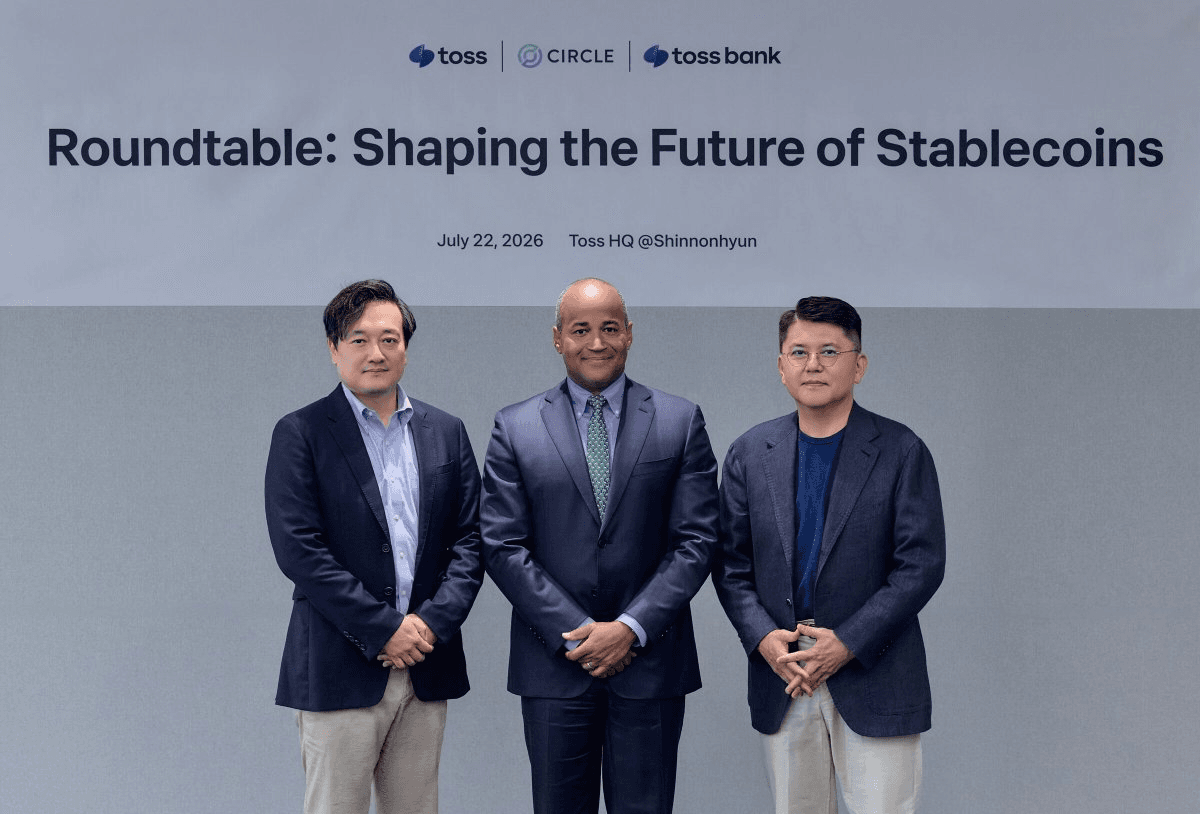
Circle has announced two major partnerships in South Korea to explore blockchain-based payment infrastructure. **Key Developments:** - Circle is collaborating with **Toss and Toss Bank** to assess stablecoin-based payment opportunities across one of Korea's most widely used fintech platforms - A separate MOU with **Kakao Group** will explore opportunities for USDC and Circle's payment rails across payments, settlement, and digital asset connectivity Both partnerships focus on integrating stablecoin technology into existing Korean fintech ecosystems. The collaborations signal growing institutional interest in blockchain payment infrastructure in one of Asia's most tech-forward markets. These moves position Circle to potentially expand USDC adoption through established platforms with millions of existing users in Korea.
Korean Firms Build Digital Asset Infrastructure Before Rules Finalize
Korean companies are moving forward with digital asset infrastructure despite incomplete regulatory frameworks. **Key developments:** - Banks, super apps, exchanges, and corporations are launching pilots and partnerships - Focus areas include settlement, issuance, custody, distribution, and cross-border treasury - Strategic shift from "should we wait?" to "which role do we want to play?" This approach contrasts with wait-and-see strategies in other markets. Korean institutions are positioning themselves across the digital asset value chain while regulators finalize rules. The Bank of Korea continues advocating for bank-led won stablecoin issuance alongside deposit token pilots. [Read more](https://www.circle.com/current/koreas-head-start-signals-for-every-market-drafting-digital-asset-rules)