BNB Bridging Bonanza Extended to March 2025 with New Token Support
BNB Bridging Bonanza Extended to March 2025 with New Token Support
🌉 Free Bridge Party Extended


The BNB Bridging Bonanza campaign has been extended to March 31, 2025, continuing to offer zero gas and bridging fees for USDC, USDT, and FDUSD transfers to BNB Chain. Users can still claim FDUSD rebates during this period.
New token support additions:
- MSM token bridging between Ethereum and Oasys Hub
- SNS token bridging expanded to include Base
The extension aims to provide users more time to benefit from gasless transfers while expanding cross-chain integration options.

🚨 FINAL CALL! The Gas-Free Carnival will be ending with 2024! 🌉Don’t miss your chance to bridge $USDC, $USDT, and $FDUSD to @BNBCHAIN gas and fee-free! ⏰💸Claim your rebates before time runs out! 👀Details: blog.celer.network/2024/09/19/bri…

🚀Extension Alert! The BNB Bridging Bonanza is Extended—Again!🚀 🌉Still haven’t bridged your $USDC, $USDT, or $FDUSD to @BNBCHAIN? You’ve got another shot! 🌟Enjoy ZERO gas & bridging fees for selected source chains, plus $FDUSD rebates to sweeten the deal. 💰No gas, no

The Gas-Free Carnival continues! 🎉 Zero gas fees for USDT, USDC, & FDUSD transfers, briding and CEX withdrawals and extended until March 31, 2025! 🤩 Enjoy seamless stablecoin experience with our growing list of partners, with more to come! Details 👇 bnbchain.org/en/blog/gas-fr…

🤩Another token is joining the ever-growing cBridge supported token list! 🚀Celer cBridge now supports the bridging of @coinmusume's $MSM between @ethereum and @oasys_games Oasys Hub! 🌉You can try it yourself now at: cbridge.celer.network/1/248/MSM
⚡️ Less than 2 weeks left to join the BNB Bridging Bonanza! Bridge $USDC, $USDT, and $FDUSD to #BNBChain gas-free and fee-free! 💥 Claim up to $1,000 in FDUSD rebates! Don’t miss out ➡️blog.celer.network/2024/09/19/bri…
Celer Extends Zero-Fee USDC Bridging to BNB Chain Through July 31
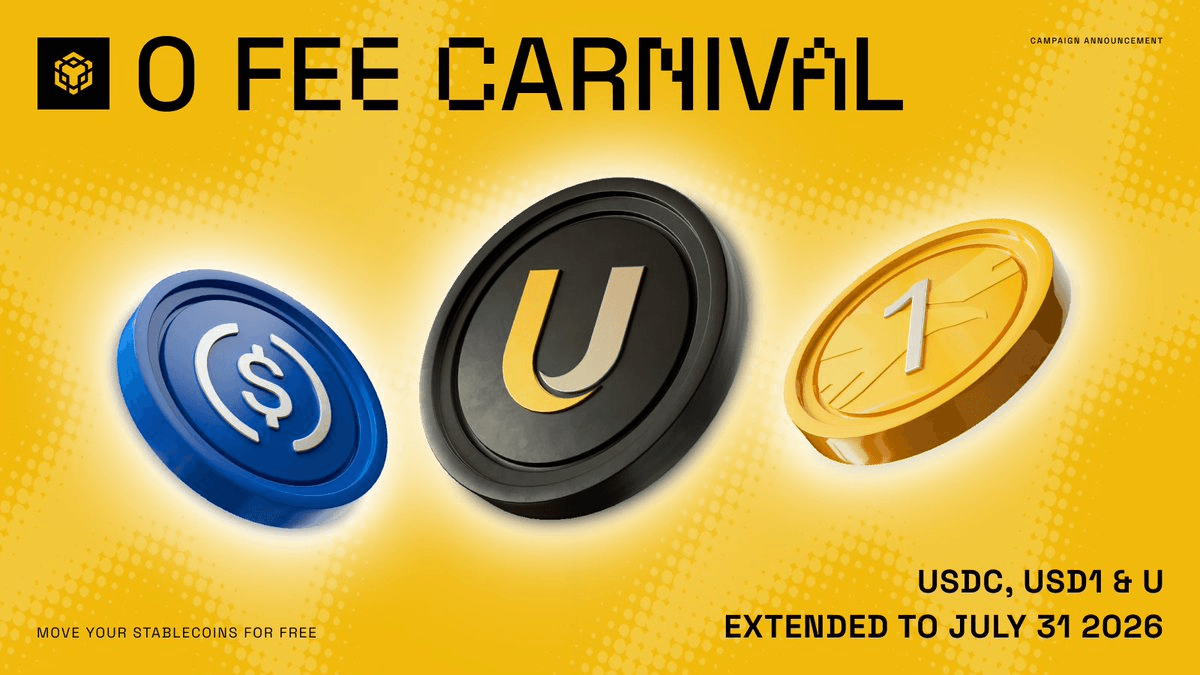
Celer Network has extended its zero-fee bridging promotion through July 31, allowing users to move USDC to BNB Chain via cBridge without paying gas fees or bridge fees. **Key Details:** - Zero gas fees and zero bridge fees for USDC transfers - Available through cBridge platform - Extended deadline: July 31 - Part of the ongoing "0 Fee Carnival" promotion - Previously included USDT and USD1 stablecoin transfers The promotion enables users to transfer stablecoins between chains at no cost, removing typical friction associated with cross-chain transactions. [Learn more about the promotion](https://blog.celer.network/2024/09/19/bridge-and-save-join-the-bnb-bridging-bonanza/)
🎉 BNB Chain Zero-Fee Carnival Extended Through April
The **BNB Chain 0 Fee Carnival** has been extended through April, continuing to offer **gas-free and fee-free USDC transfers** to BNB Chain. **Key Details:** - Zero transaction fees for USDC bridging to BNB Chain - Campaign extended beyond original timeline - Available through Celer's bridging infrastructure This extension provides users additional time to move USDC to BNB Chain without incurring typical gas or bridging fees. [Learn more about the campaign](https://blog.celer.network/2024/09/19/bridge-and-save-join-the-bnb-bridging-bonanza/)
Celer Intent Introduces Demand-Driven Cross-Chain Liquidity
Celer has launched **Celer Intent**, a new approach to cross-chain liquidity that moves capital based on actual demand rather than keeping it locked in idle pools. **Key features:** - Responsive liquidity that activates when needed - Capital-efficient design reducing wasted resources - Omnichain functionality across multiple blockchains The solution addresses a common inefficiency in current cross-chain systems, where liquidity sits unused in pools waiting for trades that may not materialize. Celer Intent aims to optimize capital deployment by directing it where activity occurs. Developers can integrate this through Celer's Inter-chain Message SDK, while users benefit from simplified cross-chain interactions. [Read the full documentation](http://intent-docs.celer.network) | [Technical blog post](https://blog.celer.network/2025/06/26/celer-intent-a-new-paradigm-for-instant-and-secure-omnichain-liquidity/)
Celer Intent Eliminates Slippage with Intent-Based Cross-Chain Liquidity
Celer has launched **Celer Intent**, an intent-based omnichain liquidity protocol that addresses key pain points in cross-chain value transfers. **How it works:** - Users submit swap or transfer requests - Request-for-quote (RFQ) broadcast to institutional market makers - Best quote is cryptographically signed and locked - Atomic settlement across chains via Celer IM **Key benefits:** - **Zero slippage** - pricing locked before execution - **MEV protection** - off-chain quote locking prevents sandwich attacks - **Capital efficiency** - liquidity deployed only when needed - **Simplified UX** - one-click experience without juggling DEXes or bridges The protocol is now live in production beta, integrated with Celer's cBridge. SDKs and APIs are available for market makers and dApps at [intent-docs.celer.network](http://intent-docs.celer.network). Unlike traditional bridge and AMM combinations that suffer from high slippage, idle capital, and MEV vulnerabilities, Celer Intent uses just-in-time liquidity matching to deliver atomic cross-chain execution without trade-offs.
Traditional Crypto Bridges Face Scalability Crisis Due to Fragmented Liquidity
Current cross-chain bridge infrastructure relies on pre-deployed liquidity pools, creating systemic inefficiencies that limit scalability. **Key challenges:** - Capital becomes fragmented across multiple chains - Shallow liquidity depth in individual pools - Large transactions cause significant price slippage - MEV bots exploit predictable trading patterns While the existing AMM-based bridge model functions, it struggles to handle growing cross-chain transaction volumes efficiently. The architecture concentrates billions in locked assets, creating security vulnerabilities where attackers target bridges rather than underlying blockchains.