Bitcoin Ordinals Minting Opportunity at Historic Low Price Point
Bitcoin Ordinals Minting Opportunity at Historic Low Price Point
🪙 Historic Bitcoin mint


A new Bitcoin Ordinals collection is available for minting at 0.0001 BTC during a period of market uncertainty.
Key Details:
- Mint price: 0.0001 BTC
- Positioning as a historic collection opportunity
- Launch timing coincides with market fear conditions
Context: The collection frames itself as an asymmetric bet on Bitcoin's history, encouraging collectors to mint during periods of maximum fear when conviction matters most. Previous historic ordinals were minted in early February.
The low entry price point makes this accessible to collectors looking to participate in Bitcoin's cultural layer through Ordinals.

gm Bitcoin 🧡 Ft. some historic ordinals minted last night:


gm Bitcoin & Ordinals collectors 🧡 Max fear is where conviction shows up. The asymmetric bet: Bitcoin’s history. Mint something historic. 0.0001 BTC

Bitcoin Art Project Defies BIP-110 with Vanity Transaction IDs
A Bitcoin art project called Relic is responding to BIP-110 by creating vanity transaction IDs starting with "dead110..." as a form of protest. **Key Points:** - BIP-110 appears to target Bitcoin inscriptions and digital art - Relic will now reveal all future pieces through transactions with the "dead110..." prefix - The project frames this as both historical documentation and political statement - Previous Relic pieces have embedded messages from old Bitcoin transactions, including one from 2012 containing "blockchain spam!!!!" The project positions itself as documenting blockchain history through generative art, with each piece derived from actual transaction data. This move represents a technical workaround to potential restrictions while making a statement about censorship resistance on Bitcoin.
Bitcoin NFTs Age Like Fine Art Over 100 Years
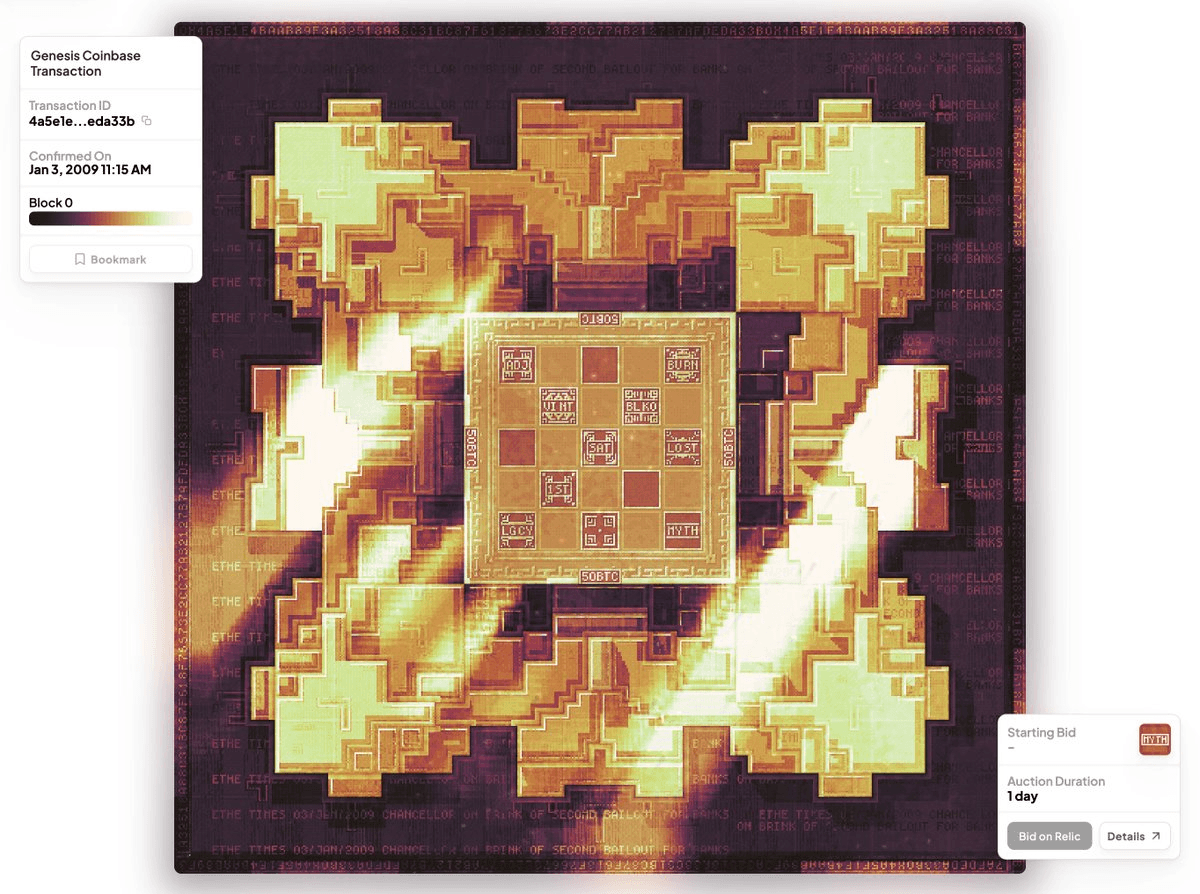
A new Bitcoin NFT collection called Relics introduces dynamic aging mechanics that mirror physical art's patina development. **Key Features:** - Each NFT ages annually on its transaction anniversary for 100 years - Visual appearance evolves year by year, accumulating digital patina - The genesis transaction (Bitcoin's oldest) leads the collection - One Relic has already developed 17 years of patina **The Concept:** The project assumes Bitcoin's longevity, designing artifacts meant to mature over a century. Like traditional art that gains character through time, these digital relics transform gradually, creating a living archive of Bitcoin's history. The collection captures blockchain moments - market sentiment, community reactions, and historical events - encoded into generative artworks derived from transaction data itself.
📸 Preserving Overlooked Blockchain Moments
A project focused on capturing and archiving blockchain history through generative art continues its mission of preserving moments that often go unnoticed. The initiative transforms on-chain transactions into visual representations, creating a cultural archive of Ethereum's evolution. Each artwork is generated from actual transaction data, incorporating the sentiment and activity of specific blocks. The project emphasizes documenting history as it happens, rather than waiting for retrospective recognition. By converting blockchain data into art, it creates a permanent record of both significant and mundane moments in crypto's timeline.
Satoshi Relics Transform Bitcoin Transactions Into Permanent On-Chain Artifacts
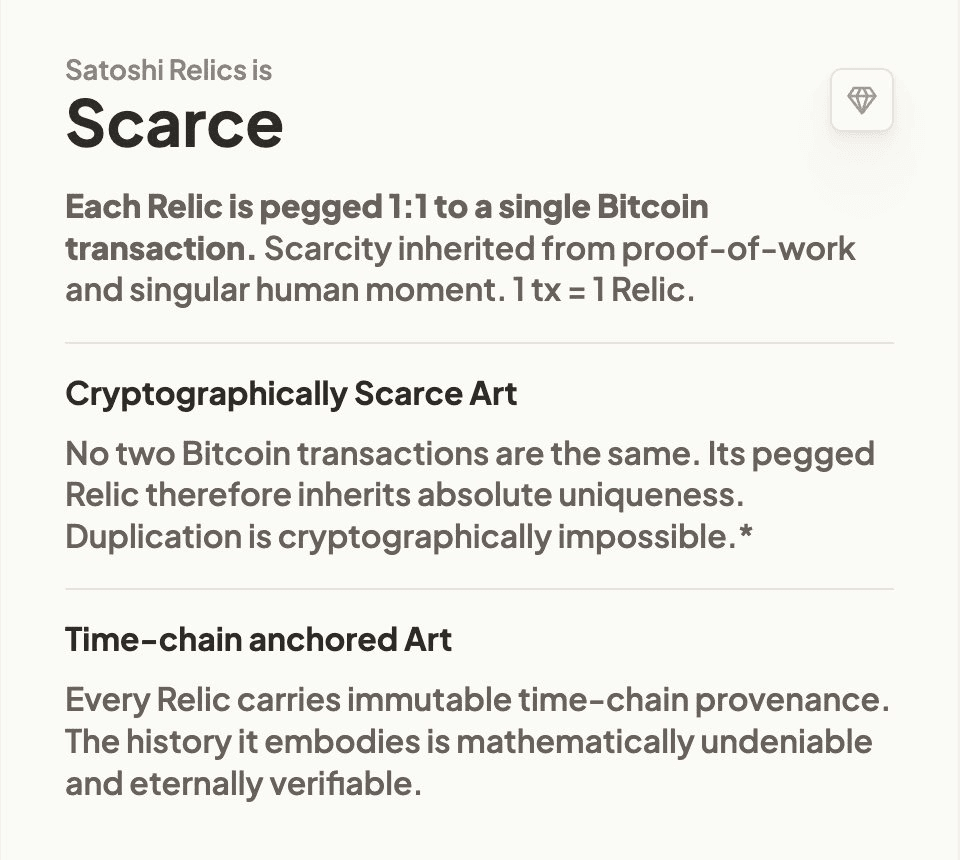
**Satoshi Relics** is a new project that converts individual Bitcoin transactions into unique Ordinal artworks, directly linking each piece to proof-of-work energy expenditure. **Key mechanics:** - Each Relic derives from a single Bitcoin transaction - Scarcity inherited from proof-of-work consensus - Energy spent once, preserved permanently on-chain - Over 1.3 billion transactions available as potential Relics **Current adoption:** - 97 of the first 100 coinbase transactions now minted as Relics - Owned by Bitcoin users, not centralized entities The project frames Bitcoin's transaction history as collectible artifacts, with artistic elements generated from transaction data itself.