Bitcoin DeFi Protocol Liquidium in Focus
Bitcoin DeFi Protocol Liquidium in Focus
🔑 Unlock Bitcoin DeFi


Liquidium is a decentralized finance (DeFi) protocol that enables users to borrow or lend Bitcoin, using unique Bitcoin-based assets called Ordinal Inscriptions as collateral. The protocol facilitates peer-to-peer Bitcoin lending, where users can earn interest by lending out their Bitcoin or borrow Bitcoin by using their Ordinals as collateral. Liquidium's operations are facilitated through Partially Signed Bitcoin Transactions (PSBTs) and Discreet Log Contracts (DLCs) to escrow the Ordinal on the Bitcoin base layer.

🔶 Bitcoin DeFi Protocol in Focus: Liquidium In this thread, we take a deep dive into @LiquidiumFi - a DeFi protocol that enables its users to borrow or lend Bitcoin, using unique Bitcoin-based assets called Ordinal Inscriptions (Ordinals) as collateral. 🧵

How Regulated Stablecoins Scale with Verifiable Pricing Infrastructure
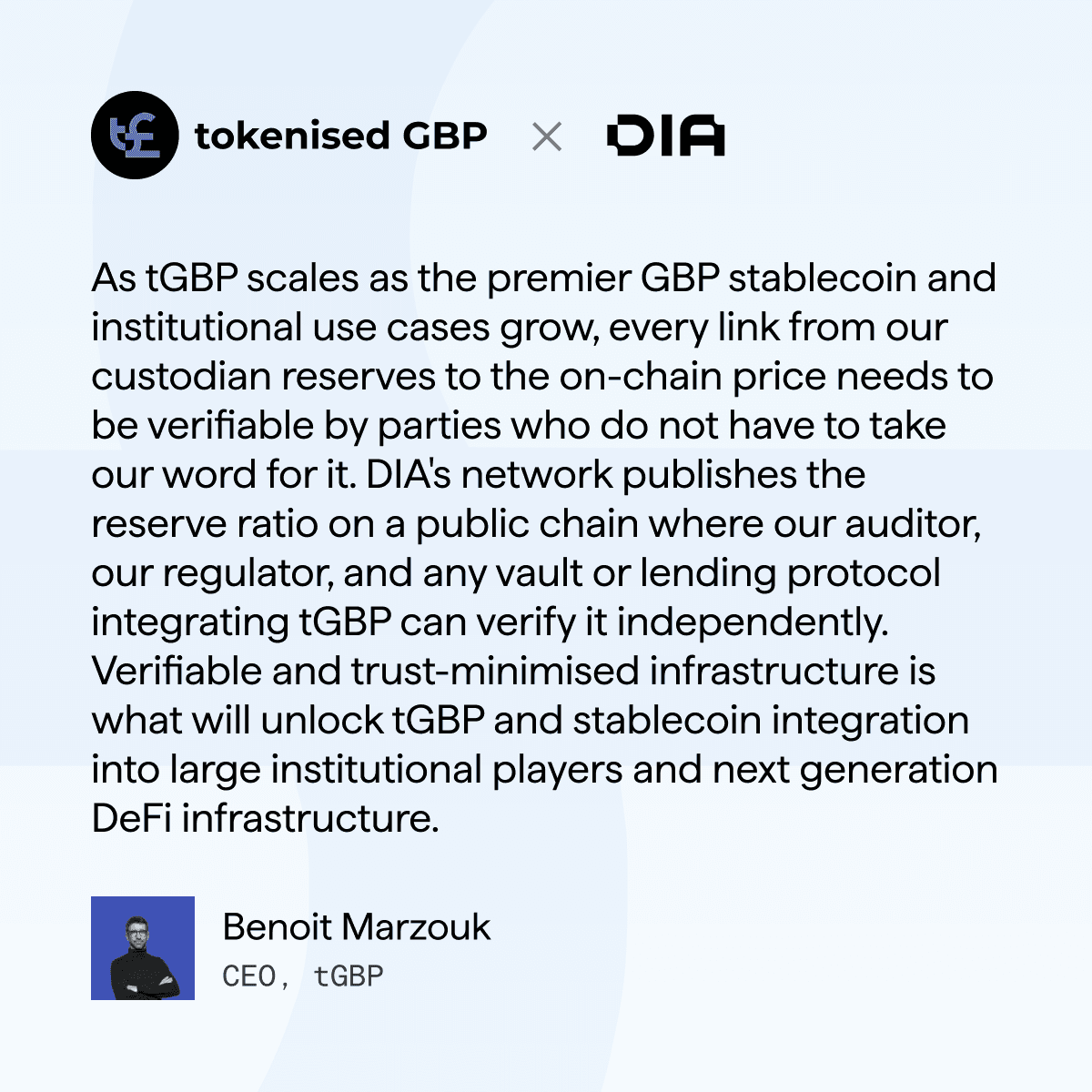
**Institutional-grade stablecoin infrastructure requires verifiable pricing mechanisms** Benoit Marzouk, CEO of tokenGBP, explains how regulated stablecoins achieve institutional scale through proper pricing infrastructure. The key insight: protocols can accept tGBP as collateral because they're pricing reserve adequacy rather than market liquidity. **Reserve-backed pricing as institutional collateral** - Enables regulated stablecoins to function in institutional settings - Protocols verify reserve adequacy instead of relying on market liquidity - Creates foundation for onchain integration at scale This approach addresses a fundamental challenge in bringing regulated stablecoins to institutional DeFi applications.
Upshift Founder Calls Out Crypto Vault Providers for Self-Reported NAV Practices
**Aya Kantor, founder of Upshift, criticized the crypto industry's approach to Net Asset Value (NAV) reporting.** - Most vault providers currently self-report their NAV, which Kantor describes as "pretty insane" - In traditional finance, fund administrators and trading desks must be separate entities - NAV calculation requires independence to maintain integrity **The core issue:** Upshift, which has grown to over $300M, was built on the principle that self-reported NAV is insufficient as traditional finance moves into crypto vaults. **Key takeaway:** As institutional capital enters crypto, the industry must adopt TradFi standards for verification infrastructure. The separation of fund administration from trading operations is non-negotiable for maintaining trust and meeting institutional requirements. This highlights a critical infrastructure gap in DeFi that needs addressing as the space matures.
Particula's PDARP Automates Lending Protocol Risk Management
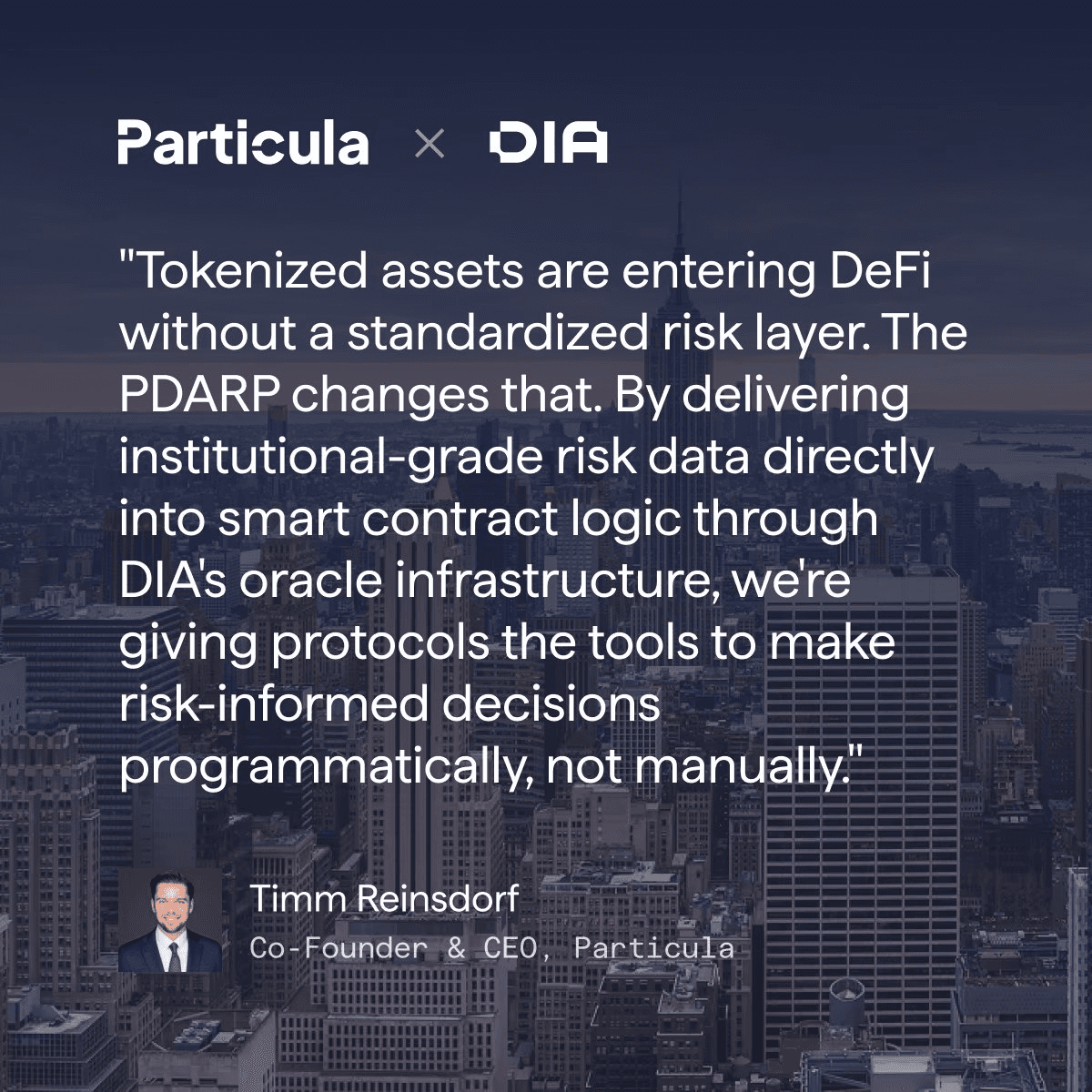
**Automated Risk Management for DeFi Lending** Lending protocols traditionally rely on manual governance votes to set collateral ratios - a slow, reactive process. [Particula's](https://particula.io) PDARP system changes this by making risk decisions continuous and automated. **How PDARP Works:** - Risk scores update in real-time - Reserve verification runs continuously - Pricing signals feed directly into smart contracts - Contracts execute parameter changes automatically without governance delays This shift from manual governance to reactive automation means lending protocols can respond to market conditions instantly. Collateral ratios, vault rebalancing, and asset eligibility now adjust based on live risk data rather than periodic votes. The integration with DIA's oracle infrastructure provides the data layer that makes autonomous risk management possible.
🔍 DIA Enables Verifiable Bitcoin Reserve Tracking for Stroom Network
**DIA partners with Stroom Network to bring transparent Bitcoin reserve verification onchain** The integration delivers Proof of Reserves methodology for strBTC through DIA Value, pulling Lightning Network node balance data directly from primary sources and publishing it to Ethereum via DIA's Lumina rollup infrastructure. **Key capabilities:** - Permissionless reserve auditing - anyone can verify BTC backing liquid staking tokens at any time - No centralized attestation required - verification happens entirely onchain - Complete data traceability from Lightning nodes to Ethereum smart contracts This approach addresses a core challenge in Bitcoin DeFi: as protocols mature beyond wrapped tokens, they need oracle infrastructure matching blockchain's verifiability promise. Rather than trusting attestation reports, strBTC holders can now verify reserves through transparent onchain data. The methodology demonstrates how cross-chain verification should work - transparently and without trusted intermediaries. For lending protocols accepting Bitcoin-backed collateral, this enables valuations anchored to actual reserves rather than market sentiment. [Read the full technical breakdown](https://www.diadata.org/blog/post/dia-enables-on-chain-verification-for-strooms-bitcoin-reserves/)
DIA Launches Contract Exchange Rate Pricing for satUSD+ to Solve Market Stress Volatility
**DIA has deployed a new fundamental pricing mechanism for satUSD+ that reads exchange rates directly from vault contracts instead of relying on secondary market trades.** **Key developments:** - DIA Value now provides Contract Exchange Rate (CER) feeds that pull satUSD+/satUSD rates directly from the staking contract on BNB Chain - This approach solves the problem of thin order books during market stress, when DEX prices can deviate significantly from actual protocol value - Lending markets integrating satUSD+ can now price the asset using verifiable onchain data rather than sparse trading activity **Why this matters:** satUSD+ value is determined by staking contract payouts, not secondary trades. Traditional market-based pricing works for satUSD (which trades across Ethereum, BNB Chain, BOB, Arbitrum, and Base), but satUSD+ needed a different solution. CER pricing anchors to what the protocol actually guarantees, providing more reliable collateral valuation for lending protocols during volatile periods. DIA continues to provide both market price feeds through its Decentralized Feeder Network and fundamental contract-based pricing depending on asset characteristics.