🔐 Binance vs Privacy
🔐 Binance vs Privacy
🔐 Compliance Wars Begin

Binance issued compliance ultimatum: comply or exit the platform.
Hypersign responds with alternative approach - progressive verification that maintains privacy while meeting compliance requirements.
Key features:
- Integration with dApps through @hypersignchain
- Flexible privacy controls - users choose openness level
- Maintains compliance without sacrificing decentralization
Hypersign positions this as "Real Web3" - privacy that connects rather than divides users and platforms.
This highlights ongoing tension between regulatory compliance and Web3 privacy principles.

Binance says: be compliant or leave. Hypersign says: be compliant your way. Integrate @hypersignchain into your dApps and enable progressive verification, stay fully private or open, without losing on compliance. Real Web3 needs privacy that connects, not divides.

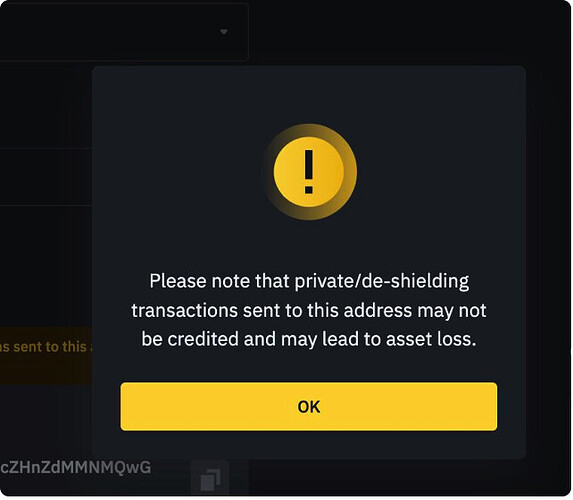
🚨Binance just made it clear: If your Zcash (ZEC) has ever touched the shielded pool it’s no longer welcome. They’ll only accept coins that stayed fully transparent, where every transaction and sender can be traced by their KYC/AML systems. In other words: 🔍 Privacy coins are
🔐 Rethinking KYC
**The Problem with Current KYC** Most KYC solutions prioritize compliance over user experience, leading to: - Unnecessary friction in onboarding - High user drop-off rates - Poor integration with decentralized systems **A Different Approach** Hypersign proposes rethinking KYC with principles that respect DeFi's foundations: - **Wallet-native**: Built for crypto users from the ground up - **Reusable**: Verify once, use across multiple protocols - **Opt-in**: Users maintain control over their data - **Interoperable**: Works seamlessly across different platforms The core argument: compliance doesn't have to break user experience. By designing KYC systems onchain-first and making them composable, verification can integrate into existing workflows without the traditional friction. This approach distributes responsibility among issuers, holders, and verifiers, allowing users to control their credentials while maintaining compliance requirements.
AI-Generated Faces and Stolen Selfies: The New Wave of Identity Fraud
**Identity fraud is evolving rapidly** as attackers deploy AI-generated faces, stolen selfies, and synthetic identities to bypass verification systems. **Key threats include:** - Deepfake technology creating convincing fake identities - Stolen biometric data from compromised devices - AI-powered attacks targeting facial recognition systems - Synthetic identity creation combining real and fake information **The impact on crypto security** is significant, as these techniques enable unauthorized access to accounts and wallets. Traditional verification methods are struggling to keep pace with these sophisticated attacks. Users should implement multi-factor authentication, monitor account activity regularly, and be cautious about sharing biometric data. Organizations need to upgrade their identity verification systems to detect AI-generated content and synthetic identities. Learn more about protecting against face-based attacks: [Binance Security Guide](https://www.binance.com/en/blog/security/dont-let-ai-steal-your-face-or-your-crypto-a-closeup-on-the-face-attack-threat-3651869644273052300?hl=en&ref=AZTKZ9XS&utm_source=BinanceTwitter&utm_medium=GlobalSocial&utm_campaign=GlobalSocial)
🔐 Hypersign Tackles Repetitive KYC with Reusable Identity Solution
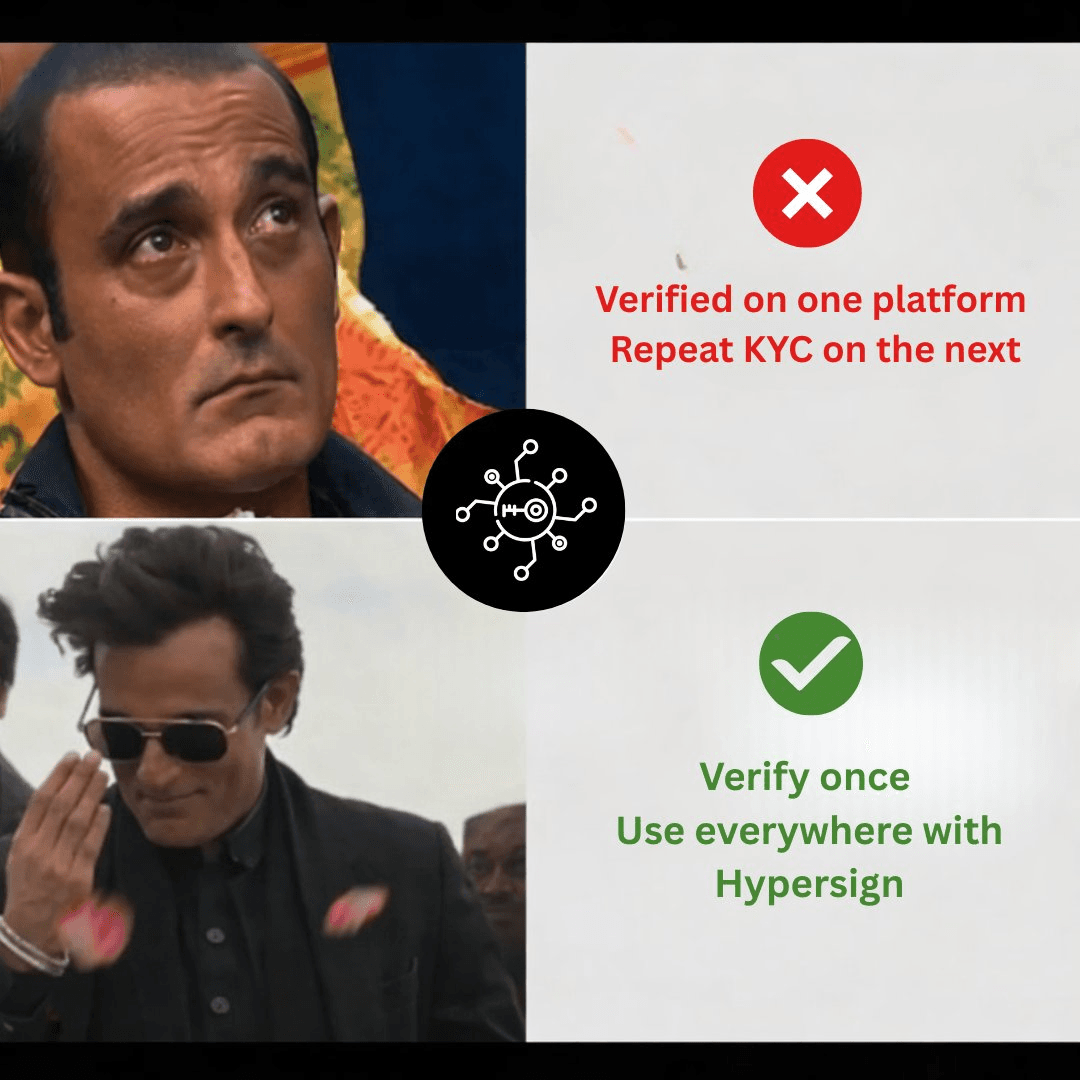
**Hypersign** is addressing a common friction point in Web3: repetitive KYC processes across different platforms. **The Problem** Users currently need to complete separate identity verification for each new dApp or service they use, creating redundant processes and privacy concerns. **The Solution** Hypersign offers a **verify-once, use-everywhere** approach: - Complete KYC verification one time - Receive a cryptographically signed credential - Reuse that credential across chains and dApps - Maintain privacy through decentralized architecture The system uses public key infrastructure and blockchain to create verifiable credentials that work across partner networks. Users control their data while issuers provide verification, and the credentials remain compatible with existing identity management systems. The platform aims to be both **privacy-first** and **regulation-ready**, positioning itself as infrastructure-layer solution for Web3 businesses. [Learn more](https://linktr.ee/hypersign)
🔄 Groundhog Day KYB
**Reusable KYB verification** aims to eliminate repetitive partner onboarding processes that slow Web3 businesses. The solution addresses a major friction point: **every new integration** - whether with partners, liquidity providers, or validators - currently triggers separate verification cycles. Key benefits: - **Faster onboarding** without repeated documentation - **Reduced compliance costs** through verification reuse - **Privacy-focused** approach to business verification - **Regulation-ready** framework for institutional needs Powered by Concordium blockchain, this approach could **accelerate product launches** and reduce delays in exchange listings. The current system forces Web3 companies to lose significant time and velocity with each new business relationship, creating unnecessary barriers to growth.
Hypersign Shifts to App Layer Focus in 2026 with Partner Ecosystem
**Hypersign announces major strategic shift for 2026**, moving from technical infrastructure to **application layer solutions**. The company plans to focus on solving **real business problems** rather than technical complexity. This transition builds on **two years of infrastructure development**. **Key partnerships driving the change:** - Concordium for blockchain infrastructure - CheqD for decentralized identity - QuillAudits for security auditing The collaboration with **QuillAudits introduces enhanced audit workflows** featuring: - On-chain KYC verification - Verified founder credentials - Privacy-first compliance tools This represents a **trust upgrade for the web3 ecosystem**, moving beyond technical jargon to practical business applications.