🔴 Binance Delists $DATA
🔴 Binance Delists $DATA
😬 Binance says goodbye

Binance will delist $DATA on February 13, 2026, despite Streamr's efforts to maintain the listing.
Key details:
- No advance notice was provided by Binance
- Streamr improved liquidity and ran trading campaigns after monitoring tag appeared
- Team believes they met Binance guidelines, but delisting reasons remain unclear
What's next:

We’re disappointed to confirm that Binance will delist $DATA on 13 February 2026. Binance does not provide advance notice. Once the monitoring tag was applied earlier this year, we took immediate action to defend the listing, including improving order book liquidity and running
Video Calls Go Serverless for True Privacy by Design
A major shift in video call architecture removes central servers entirely, making privacy a structural feature rather than a policy promise. **Key changes:** - Calls now operate without central server infrastructure - Privacy guaranteed by architecture, not corporate policy - Opens possibilities for human vs AI verification without surveillance The move addresses fundamental privacy and reliability issues that stem from centralized server models. By eliminating the middleman, the new approach ensures calls remain genuinely private by design.
Streamr App Runs Live Video Through Decentralized Network Nodes
**Streamr App operates without central servers**, relying entirely on the Streamr Network for live video streaming. **How it works:** - When a call or stream begins, network operator nodes automatically join to relay the content - Uses the same pub/sub infrastructure that powers real-time data across the network - No centralized servers required - the network handles all processing **Key distinction:** Streamr functions as a protocol for real-time data streaming between any source and destination, supporting applications from IoT to live video. The approach eliminates traditional trust dependencies by distributing video relay across decentralized nodes rather than routing through centralized infrastructure.
Streamr's Node Operators Relay Encrypted Streams Without Access to Content or Keys
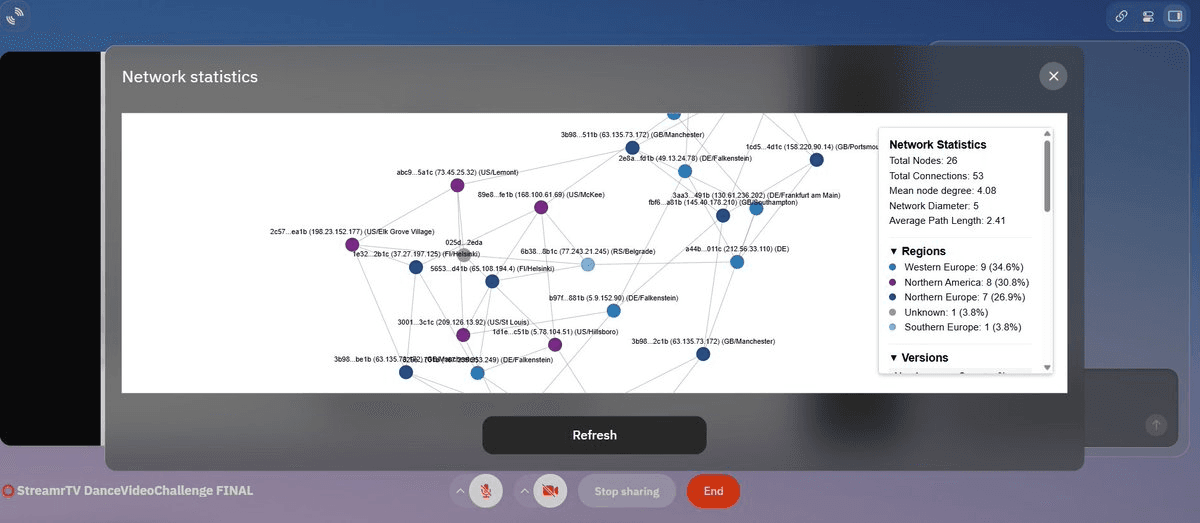
Streamr's network architecture allows node operators to relay data streams without accessing the actual content. Key features include: - **Zero-knowledge relay**: Operators cannot see, store, or decrypt the content they transmit - **No centralized control**: No single entity decides what data is logged or retained - **Distributed architecture**: Data doesn't pool in any central location - **Operator choice**: Node runners select which streams to help relay This design represents a departure from traditional decentralized networks that still depend on central trackers or servers. The system maintains true peer-to-peer streaming without creating bottlenecks or single points of failure.
🔐 Cloud Keys Aren't E2EE
**The encryption gap in video calls** Most video platforms claim end-to-end encryption, but there's a catch. Zoom and Google Meet often store encryption keys in the cloud, managed by the vendor. **Why this matters:** - Keys stored in the cloud sit inside the vendor's trust boundary - This breaks the fundamental promise of end-to-end encryption - True E2EE requires keys to remain exclusively on user devices The distinction is simple: if a third party can access your keys, your communication isn't truly end-to-end encrypted.
Streamr App Alpha Launches Serverless Video Conferencing
**Streamr App Alpha is now live**, offering a serverless alternative to traditional video conferencing platforms. **Key features:** - Unlimited meeting length and attendees (up to 10 speakers) - End-to-end encrypted video and chat - Peer-to-peer architecture with no central servers - No third-party access to calls Unlike conventional platforms that route calls through company servers, Streamr App connects users directly device-to-device. The serverless design eliminates middlemen and reduces vendor dependence. The alpha release follows a year of development focused on privacy-first architecture. Users can [try the alpha](https://streamr.com/) and provide feedback to shape future development.