Astar Network Integrates with AggLayer, Enabling Mazda's NFT Art Debut
Astar Network Integrates with AggLayer, Enabling Mazda's NFT Art Debut
🚀 Zoom Into Web3

Astar Network has become the first blockchain to integrate with AggLayer, a platform that provides a unified user experience for brands entering the Web3 space. This integration paves the way for companies like Mazda to debut their NFT art collections, such as the one launched on Yoki Origins, a platform built on Astar Network. The move highlights Astar Network's commitment to exploring the frontiers of zero-knowledge innovation and Ethereum scaling solutions.

🚗 zoom zoom As the first chain to integrate into the AggLayer, @AstarNetwork is paving the way for brands to enter the space with a unified user experience. Explore Mazda's NFT art debut on Yoki Origins 👇🏽

🚗 @Mazda_PR, a renowned global automotive company, is unveiling its distinctive NFTs as part of "Yoki Origins" on Astar zkEVM, powered by @0xPolygon CDK. With symbolic significance, it's not just a first step but potentially the start of a captivating series. Infused with

Mento Protocol Brings Local Currency Stablecoins to Polygon
**Mento Protocol has launched on Polygon**, bringing its foreign exchange protocol for local currency stablecoins to the network. **Key Details:** - The protocol starts with a USDm/EURm trading pool - Capa Finance provides day-one liquidity support - Schuman's EURP serves as a reserve asset backing EURm - Built on Polygon's Open Money Stack infrastructure This deployment enables onchain access to local currency stablecoins using Polygon's payment rails. [Read the full announcement](https://polygon.technology/blog/mento-protocol-launches-on-polygon-for-local-currency-stablecoin-payments)
Coinbase Enables Multi-Currency Onchain Payments for Businesses
Coinbase has launched a solution allowing businesses to move between different currencies onchain, addressing a longstanding infrastructure gap in digital payments. **Key Development:** - Businesses can now conduct multi-currency transactions directly onchain - Solves the reliability problem that previously limited onchain payment adoption - Builds on Coinbase's June partnership with MassPay for cross-border stablecoin payouts **Background Context:** The move follows Coinbase's earlier work on cross-border payments, which traditionally required businesses to prefund accounts across multiple corridors, creating delays and inefficiencies. Stablecoins have emerged as a faster alternative with reduced friction. This infrastructure development aims to make onchain payments more practical for business operations that naturally involve multiple currencies.
🔧 Polygon Chain Rolls Out New Payments Upgrade
Polygon Chain is implementing another payments infrastructure upgrade, continuing its rapid development cycle. **Key Details:** - This marks the third mainnet upgrade in four months - Each upgrade progressively enhances payment infrastructure capabilities - The latest improvements focus on faster transaction confirmations and more predictable fees - Network resilience has been strengthened The consistent upgrade schedule demonstrates Polygon's commitment to iterative improvements in payment processing speed and reliability. More information: [polygon.technology/blog](https://polygon.technology/blog/giugliano-upgrade-faster-confirmations-predictable-fees-and-a-more-resilient-network-for-polygon-chain)
Polymarket World Cup Market Hits $4.3B, Shatters All Previous Records
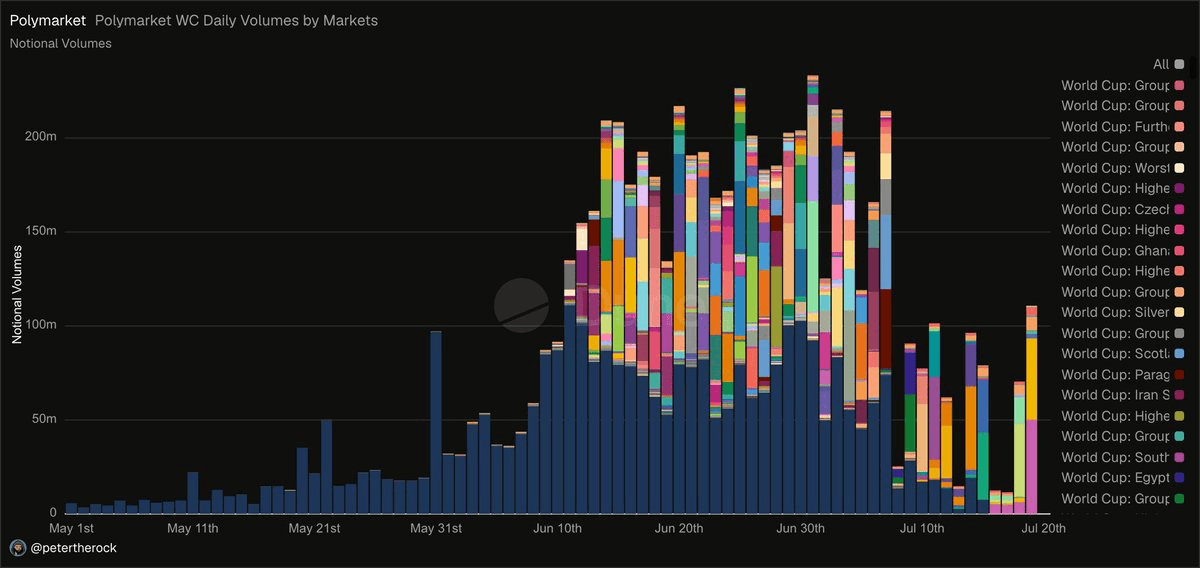
Polymarket's World Cup prediction markets have set a new benchmark for onchain activity, with the tournament's Winner market alone reaching **$4.3 billion** - the largest single onchain market in history. **Key Highlights:** - Over **300 markets** ran across 104 games during the six-week tournament - Total monthly volume hit a record **$10.7 billion**, primarily driven by World Cup betting - The flagship Winner market exceeded the combined volume of all Polymarket's 2024 presidential election markets - Markets covered everything from match winners to Golden Boot predictions The scale demonstrates Polygon's capacity to handle massive onchain activity, with the platform processing what Polymarket describes as "the biggest event in onchain prediction market history."
Polygon Integrates with Ramp for Onchain Money Movement
Polygon has partnered with Ramp to enable onchain money movement, expanding options for users to transfer funds on the network. **Key Details:** - Integration focuses on stablecoin transactions - Builds on previous USDC ramp implementations on platforms like Slash - Designed to serve affiliates, companies, and contractors The partnership aims to simplify the process of moving money onchain through Ramp's infrastructure. More information about the integration is available at [Ramp's blog](https://ramp.com/blog/introducing-stablecoins).