AI Development Shifts From Large Models to Autonomous Agent Systems
AI Development Shifts From Large Models to Autonomous Agent Systems
🤖 Models vs Agents


The AI landscape is undergoing a fundamental transformation according to Messari's latest State of AI report.
Key shift identified:
- The frontier has moved away from training massive models
- Focus now on building autonomous systems that execute real workflows
- Emphasis on practical AI agents over raw computational power
This trend aligns with broader industry observations about AI entering a new phase centered on autonomy and infrastructure rather than simply scaling model size.
The report highlights how AI development priorities are evolving to support systems that can independently handle complex tasks and workflows.

🤖 AI Is Entering Its Weirdest Phase Yet… @Gartner_inc 2025 AI Hype Cycle quietly reveals where the real momentum in AI is heading. Spoiler: it’s not just about bigger models anymore. It’s about AI agents, autonomy, and the infrastructure needed to support them. ⏬

🔍 Top Trends From @MessariCrypto AI Report The new State of AI highlights the shifts shaping how AI is actually being built today. 🤖 Models → Agents The frontier has moved from training huge models to building autonomous systems that execute real workflows. 👇

🧩 Morpheus Builds Coherent AI System
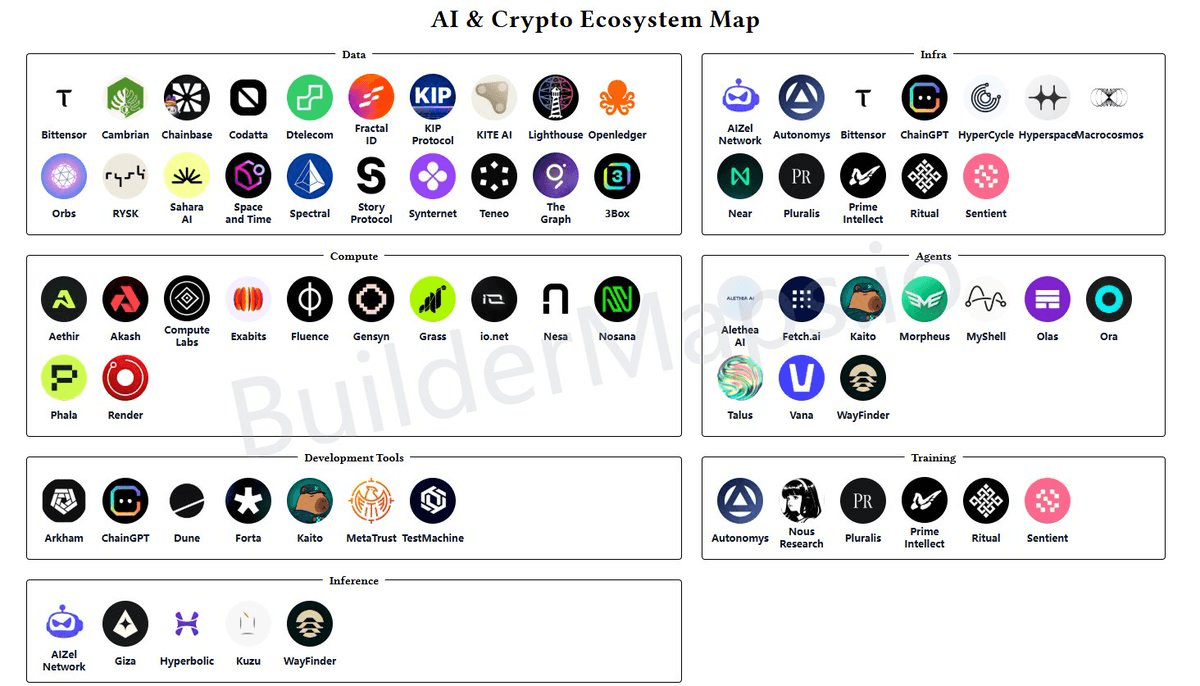
The real competition in decentralized AI isn't between individual layers - it's between **coherent systems** that connect everything together. **Morpheus stands out** as one of the few projects attempting to integrate: - Infrastructure - Data processing - AI inference - Development tools - Autonomous agents This **integrated approach** creates a complete value loop rather than fragmented components. While most projects focus on single layers, Morpheus aims to build a unified ecosystem where all parts work together seamlessly. The project combines decentralized compute and storage infrastructure with Smart Agents that can execute contracts on users' behalf, potentially making Web3 accessible to mainstream users through AI interfaces.
Morpheus Migrates to Base L2 for AI Protocol Scaling
**Morpheus is preparing for major scaling** by migrating from Arbitrum to Base L2, streamlining its decentralized AI protocol. **Key developments this week:** - 70+ commits shipped across the ecosystem - Dashboard V2 launched with faster multi-network sync - Marketplace API improved for better performance - Smart contracts integrated with Base L2 **The migration positions Morpheus** where AI growth is accelerating, making the protocol faster and more scalable. This move represents a **strategic shift** for the peer-to-peer AI network that enables Smart Agents to execute contracts on behalf of users. [Read full details](https://x.com/MorpheusAIs/status/1999177444792893618?s=20)
🔥 MOR Supply Shock Coming
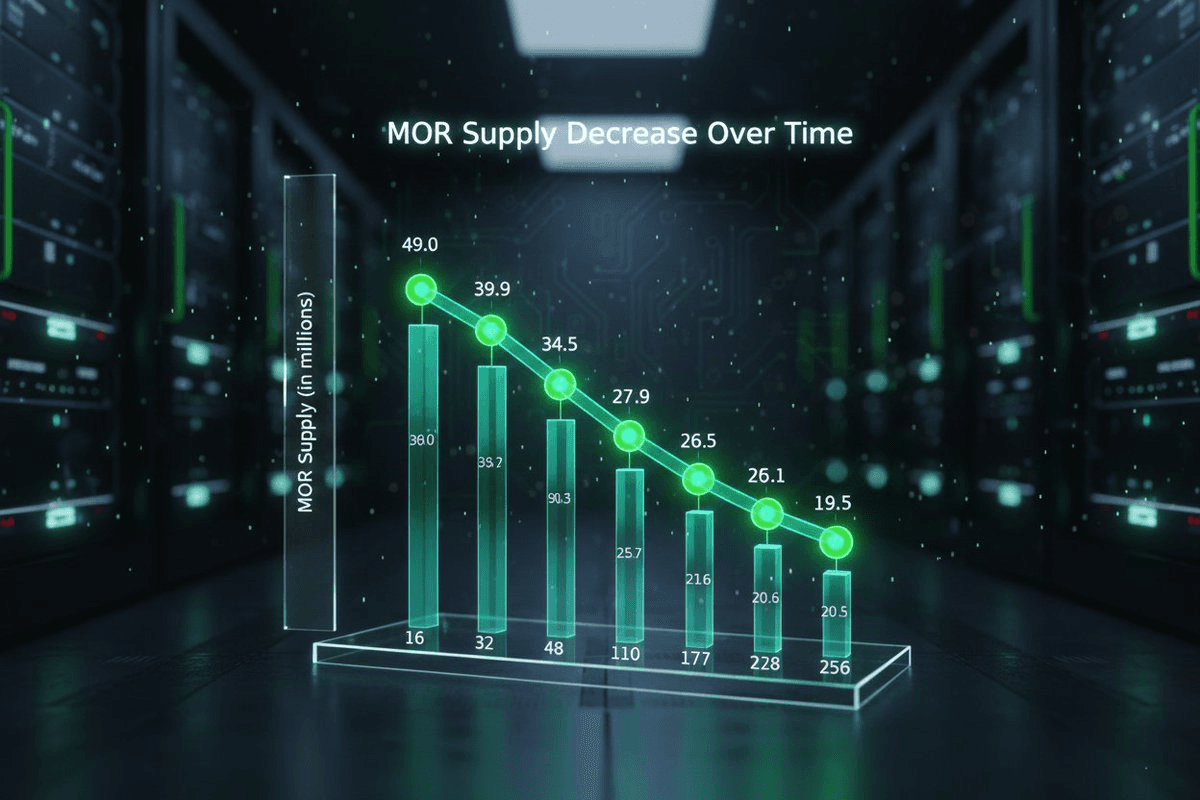
**MOR token emissions face major changes after 2040** when Epoch 1 ends and scheduled emissions stop. **Key Changes:** - Tail emissions begin at 50% of next epoch's allocation - Distribution spreads evenly over 5,833 days - Pattern repeats indefinitely to maintain incentives **Current Supply Metrics:** - 194,000+ MOR tokens locked - ~400,000 MOR removed from circulation - Supply tightening creates scarcity **Impact:** The predictable emission floor combined with reduced supply aims to build a sustainable long-term token economy. As scheduled emissions end, the tail emission model ensures continued network incentives while maintaining scarcity.
📊 Data Bottlenecks Replace Compute Limits
The AI landscape is shifting as **compute power is no longer the primary constraint**. Instead, organizations are struggling with data quality issues. **Key developments:** - Structured, reliable, and interoperable data has become the main bottleneck - Open-source models are gaining enterprise adoption for speed and control - Infrastructure tools like routing, orchestration, and tooling are driving productivity gains This represents a fundamental change in how AI systems are built and deployed, with **data architecture becoming more critical than raw processing power**.