Aerodrome Finance Shows Revenue Growth with Declining Net Emissions
Aerodrome Finance Shows Revenue Growth with Declining Net Emissions
📊 Aerodrome's surprising efficiency shift


Aerodrome Finance, Base's central liquidity hub, reports increasing revenue alongside decreasing net emissions.
This trend suggests improved protocol efficiency - the platform is generating more income while distributing fewer token incentives. The pattern has been consistent, with similar metrics observed in late August 2025.
Key Points:
- Revenue trending upward
- Net emissions trending downward
- Indicates stronger protocol economics
The data reflects Aerodrome's AMM performance as it continues operating its liquidity incentive engine and vote-lock governance model on Base.
Revenue 📈 Net Emissions 📉

Last epoch, Aerodrome generated ~$2.3M in revenue while $AERO Locks > $AERO Emissions: Earning and distributing yield to voters while functionally reducing circulating supply by ~1.6M

Summer Finance Token Launches on Major Exchanges Within 24 Hours
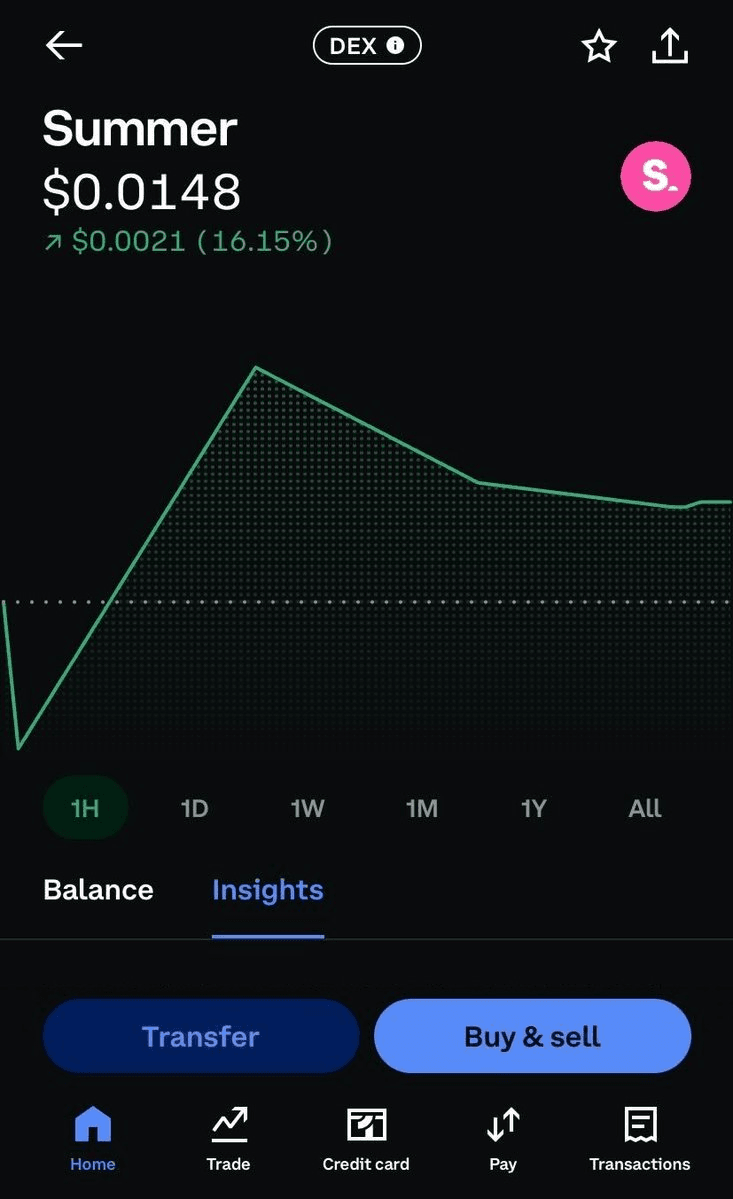
**$SUMR Token Launch Recap** Summer Finance's governance token $SUMR launched this week with rapid exchange adoption: - Listed on Coinbase and OKX within 24 hours of launch - veAERO voters received early access to claim, deposit and stake $SUMR - Token enables holders to earn staking rewards and revenue distribution **Key Developments** - Aerodrome serves as the unified liquidity layer connecting millions of users - Launch featured X Spaces discussion on Aero Ignition program - Markets expected to experience volatility as pricing stabilizes **Additional Updates** - Flight School educational initiative announced - Aerodrome positioning as home for FX trading onchain - Discussion of DEX innovation and revenue vs net emissions metrics The token launch represents Summer Finance's entry into decentralized governance, with Aerodrome providing the underlying liquidity infrastructure.
ACU-USDC Pool Now Eligible for AERO Emissions on Aerodrome
Aerodrome Finance has added the **$ACU - $USDC** trading pool to its emissions program, making it eligible to receive **$AERO token rewards**. **Key Details:** - Acurast ($ACU) joins Aerodrome's liquidity incentive program - The ACU-USDC pool can now receive AERO emissions through governance votes - This follows similar recent additions including ELSA and PORTAL pools **What This Means:** Liquidity providers in the ACU-USDC pool can now earn additional AERO token rewards on top of trading fees. The amount of emissions each pool receives is determined by Aerodrome NFT holders through vote-lock governance. This integration strengthens Acurast's presence on Base and provides new earning opportunities for liquidity providers.
Aerodrome Activates FUN Token Emissions Following 5M Token Incentive Deposit

Aerodrome Finance has activated emissions for the FUN token in what they're calling the "Funderdrome." Users can now swap and provide liquidity for $FUN. **Recent developments:** - Emissions are now live for FUN-USDC pool - 5 million $FUN deposited as voting incentives on January 19 - Initial launch occurred January 15 on Aerodrome The rollout follows Aerodrome's standard liquidity incentive model, where token emissions and voting incentives work together to bootstrap liquidity. The FUN token, associated with football.fun, is now integrated into Base's central liquidity hub. Users can participate by swapping FUN tokens or adding liquidity to the FUN-USDC pool to earn from the emissions program.
Aerodrome Generates $2.3M Revenue as Token Locks Exceed Emissions
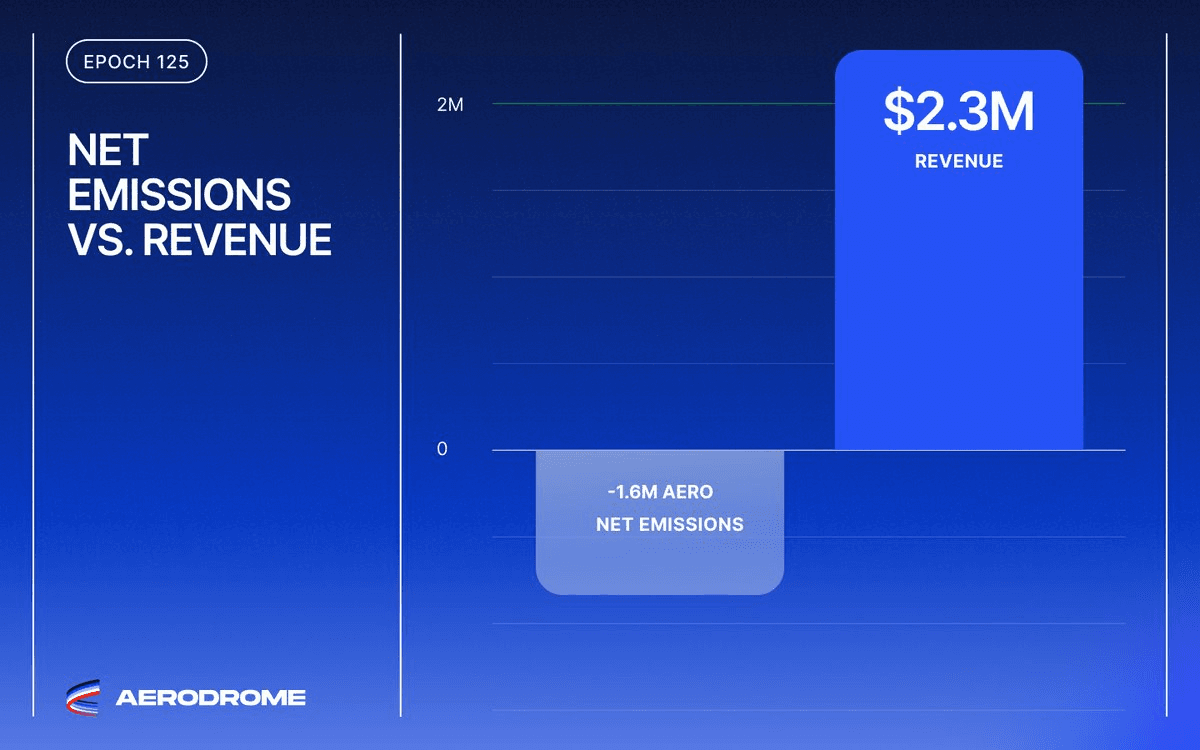
Aerodrome Finance reported $2.3M in revenue for its last epoch, with a notable development: **$AERO token locks surpassed emissions**. **Key metrics:** - Revenue distributed to voters as yield - Circulating supply reduced by approximately 1.6M tokens - ~50% of total $AERO supply currently locked - Average lock duration: 3.71 years - ~95% of locks are auto-max locked - Over 40,000 $veAERO holders - $445M+ total distributed to voters to date The protocol continues to function as Base's central liquidity hub, with its vote-lock governance model creating deflationary pressure on circulating supply while rewarding long-term participants.