Aave V4 Tackles Idle Capital Problem with Automated Yield Strategies
Aave V4 Tackles Idle Capital Problem with Automated Yield Strategies
💤 Dead Money Problem

Aave V4 introduces a solution to address idle capital in lending pools by automatically sweeping unused funds into DAO-approved yield strategies. The protocol now deploys dormant assets into:
- sGHO (staked GHO stablecoin)
- Treasury bills
- Lower-risk liquidity hubs
This addresses a broader DeFi challenge: over $10B in DAO treasuries currently earns near-zero yield, with 35-40% sitting idle in stablecoins. The bottleneck isn't lack of opportunities, but structural issues around risk policies, governance bandwidth, and accountability.
The shift represents a move toward policy-defined automation rather than manual yield chasing. By setting allocation ranges and risk parameters upfront, protocols can generate returns while maintaining capital preservation and transparent risk management.
dHEDGE is exploring similar approaches across the DeFi stack, emphasizing that every layer should actively deploy capital within defined guardrails.

Idle capital in lending pools is an underrated cost Aave V4 now sweeps it into DAO-approved yield strategies. sGHO, t-bills, lower risk hubs Something we think about a lot at dHEDGE too. Every layer of the stack should be putting capital to work

Aave V4 reinvestment feature enables to sweep float liquidity into DAO-approved strategies such as lower risk hubs, sGHO or t-bills. Creating better capital efficiency for Aave.
Aave Reclaims $16.7M from MEV Searchers Using Chainlink Integration
**Aave has successfully recovered $16.7 million** that previously leaked to MEV (Maximal Extractable Value) searchers through its integration with Chainlink's Smart Value Recapture (SVR) system. **Key Performance Metrics:** - Processed $675 million across approximately 3,900 liquidations - Achieved a 73% non-toxic MEV recapture rate - Integration launched in Aave's Ethereum market in March 2025 The recaptured value now flows directly to the Aave DAO instead of external MEV searchers, improving the protocol's economics and benefiting all projects built on top of the platform.
12B Asset Manager Adopts Vault-Based Strategy for All Asset Management
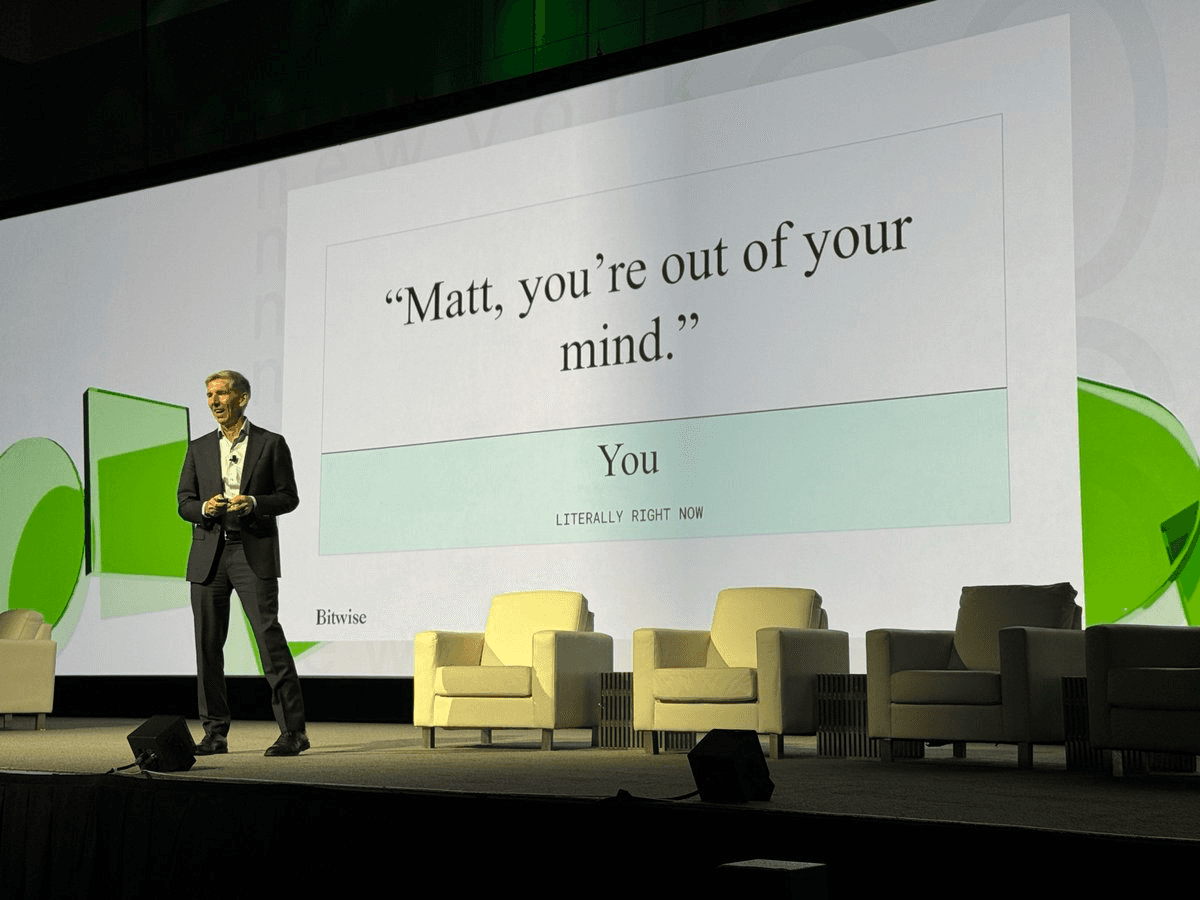
A $12 billion asset manager has announced a significant shift in their operational approach, stating that **all asset management will be conducted through vaults**. This marks a notable adoption of DeFi-native infrastructure by traditional finance: - The firm is embracing vault-based architecture, a model commonly used in decentralized finance - This represents a concrete example of institutional adoption of onchain asset management practices - The move signals growing confidence in blockchain-based financial infrastructure among large-scale asset managers The announcement follows a broader trend of asset management migrating to blockchain rails, with vaults providing transparent, programmable structures for capital deployment.
Institutional Giants Deploy $250T AUM on Ethereum Infrastructure

Major financial institutions representing $250 trillion in assets under management are moving beyond exploration to active deployment on Ethereum. **Key Players:** - BlackRock - Robinhood - Moody's These institutions are transitioning from research phase to implementation, seeking onchain strategies for their operations. The infrastructure and strategies they require already exist within the Ethereum ecosystem - the challenge lies in discovery and integration. This marks a significant shift from institutional curiosity to concrete action, as traditional finance giants commit resources to blockchain-based operations.
🔐 AI Agents Don't Need Wallets—They Need Vaults
**The core principle**: Don't hand an AI agent a wallet and hope it behaves. Instead, grant it access to a vault governed by unbreakable smart contract rules. **How it works**: - AI agents handle strategy and decision-making - Smart contract vaults enforce hard limits and constraints - The agent can only operate within predefined boundaries - No matter how autonomous the AI becomes, it cannot exceed the vault's programmed restrictions **The safety model**: This approach separates intelligence from custody. The AI optimizes within a sandbox, while the vault acts as an immutable guardrail system that prevents unauthorized actions or excessive risk-taking.